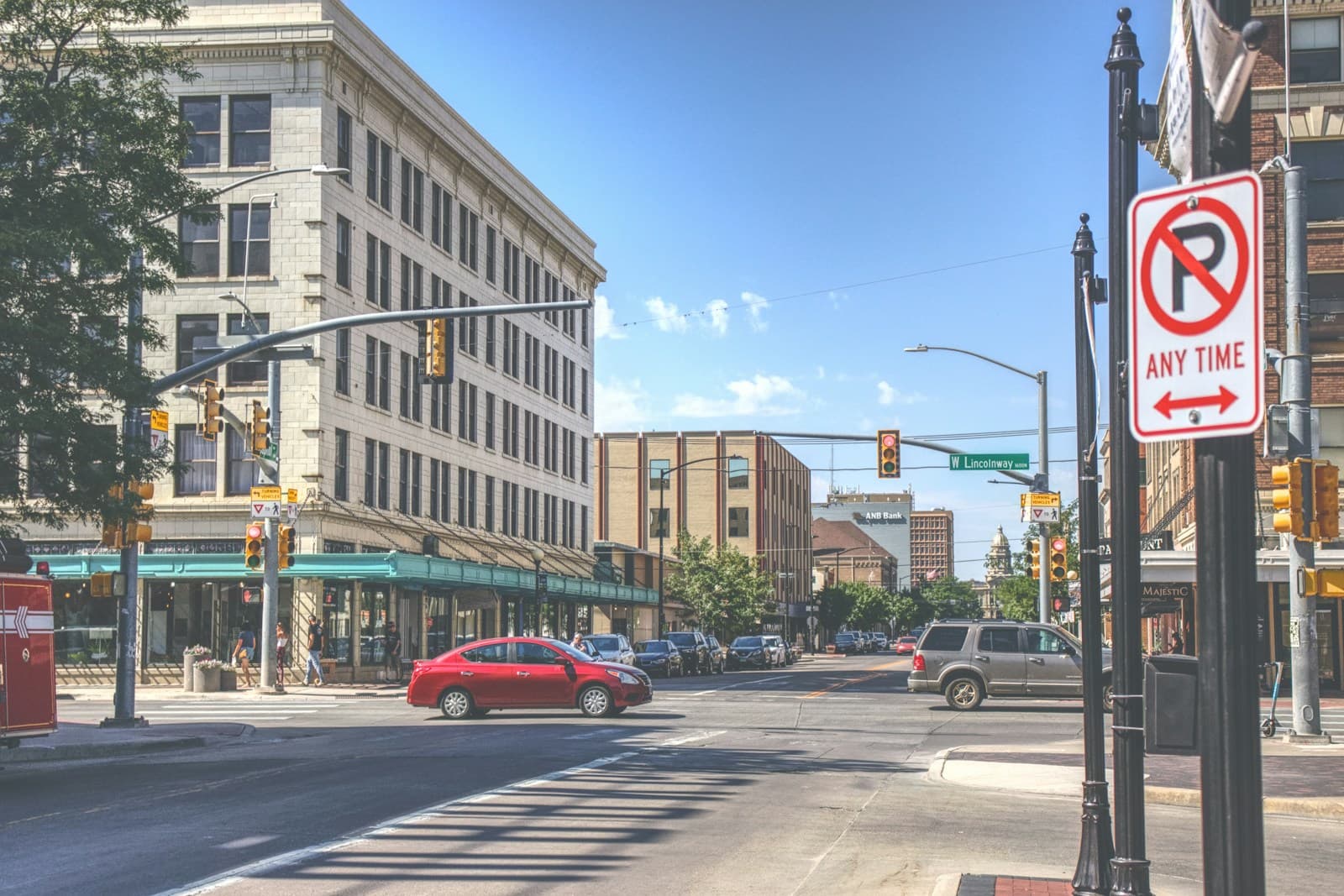
What Affects Rates in Cheyenne
- Many Cheyenne teens commute along or across I-25 to reach East, Central, and South high schools, or drive I-80 segments for jobs in the Lincolnway retail corridor. Both interstates experience severe crosswinds and black ice from October through April, and teen drivers unfamiliar with sudden gusts or ice patches contribute to Cheyenne's elevated collision frequency for drivers under 20. Parents should weigh whether collision coverage on an older vehicle is justified by the teen's specific route—a student driving surface streets to Central may face lower risk than one commuting daily on I-25 to a part-time job in north Cheyenne.
- Cheyenne's three main high schools are spread across the city's suburban grid, and most teens drive rather than walk or use transit. East High sits near Randall Avenue and Missile Drive, Central near Carey Avenue, and South near Stinson Avenue—each requiring highway or arterial road use during morning and afternoon peaks. This pattern increases daily mileage and highway exposure compared to compact towns like Laramie, where more students live within walking distance of a single campus.
- At 6,100 feet, Cheyenne experiences colder overnight temperatures and more frequent freezing rain than lower-elevation cities such as Casper or Rock Springs, creating black ice on overpasses and shaded road sections along Dell Range Boulevard and College Drive. Teen drivers unfamiliar with ice formation patterns are overrepresented in November-through-March single-vehicle accidents in Cheyenne, making comprehensive coverage for weather-related damage and collision coverage for ice-related incidents more relevant here than in milder Wyoming markets.
- Part-time teen jobs cluster along Lincolnway (US-30) in retail and fast food, and at Frontier Mall near Dell Range Boulevard, requiring evening and weekend driving during peak wind and reduced visibility hours. Teens working closing shifts drive home on arterial roads like Central Avenue and Pershing Boulevard when fatigue and darkness compound inexperience, elevating risk compared to daytime school commutes.
- Cheyenne's suburban base rates are lower than urban markets but higher than rural Wyoming due to interstate exposure and weather severity, meaning the percentage increase from adding a teen driver applies to a moderate baseline. A parent paying $140/month for full coverage may see the premium jump to $320–$460/month with a 16-year-old male driver, making discount stacking—good student, driver training, telematics—critical to affordability in this market.
See what adding a teen driver actually costs in your state
Compare quotes from carriers that offer good student discounts — most parents find savings they didn't know were available.
Get Your Free QuoteCoverage Recommendations
Cost estimates are based on available industry data and vary by driver profile. These are not insurance quotes.
Liability Insurance
Cheyenne teens driving I-25 during winter commutes face elevated multi-vehicle accident risk from ice and wind gusts, making higher liability limits—100/300/100—worth considering to protect parent assets if the teen is at fault in a chain-reaction collision on the interstate.
$$Estimated range only. Not a quote.
Collision Coverage
For teens driving newer or financed vehicles on I-25, College Drive, or Dell Range Boulevard—where black ice and crosswinds cause frequent single-vehicle incidents—collision coverage recovers repair costs that would otherwise fall to the parent, but may not justify the deductible if the teen drives a paid-off vehicle worth under $5,000.
$$$Estimated range only. Not a quote.
Comprehensive Coverage
Cheyenne's elevation produces severe hailstorms from May through August that dent vehicles parked at East, Central, and South high schools, and deer strikes occur on Campstool Road and Happy Jack Road where suburban development meets open range, making comprehensive coverage relevant for any vehicle the teen drives regularly.
$$Estimated range only. Not a quote.
Uninsured Motorist Coverage
Wyoming does not mandate uninsured motorist coverage, but Cheyenne's position on I-25 and I-80 brings transient traffic from states with varying enforcement, increasing the chance a teen is struck by an out-of-state uninsured driver during a commute or weekend trip.
$Estimated range only. Not a quote.