What Affects Rates in Morgantown
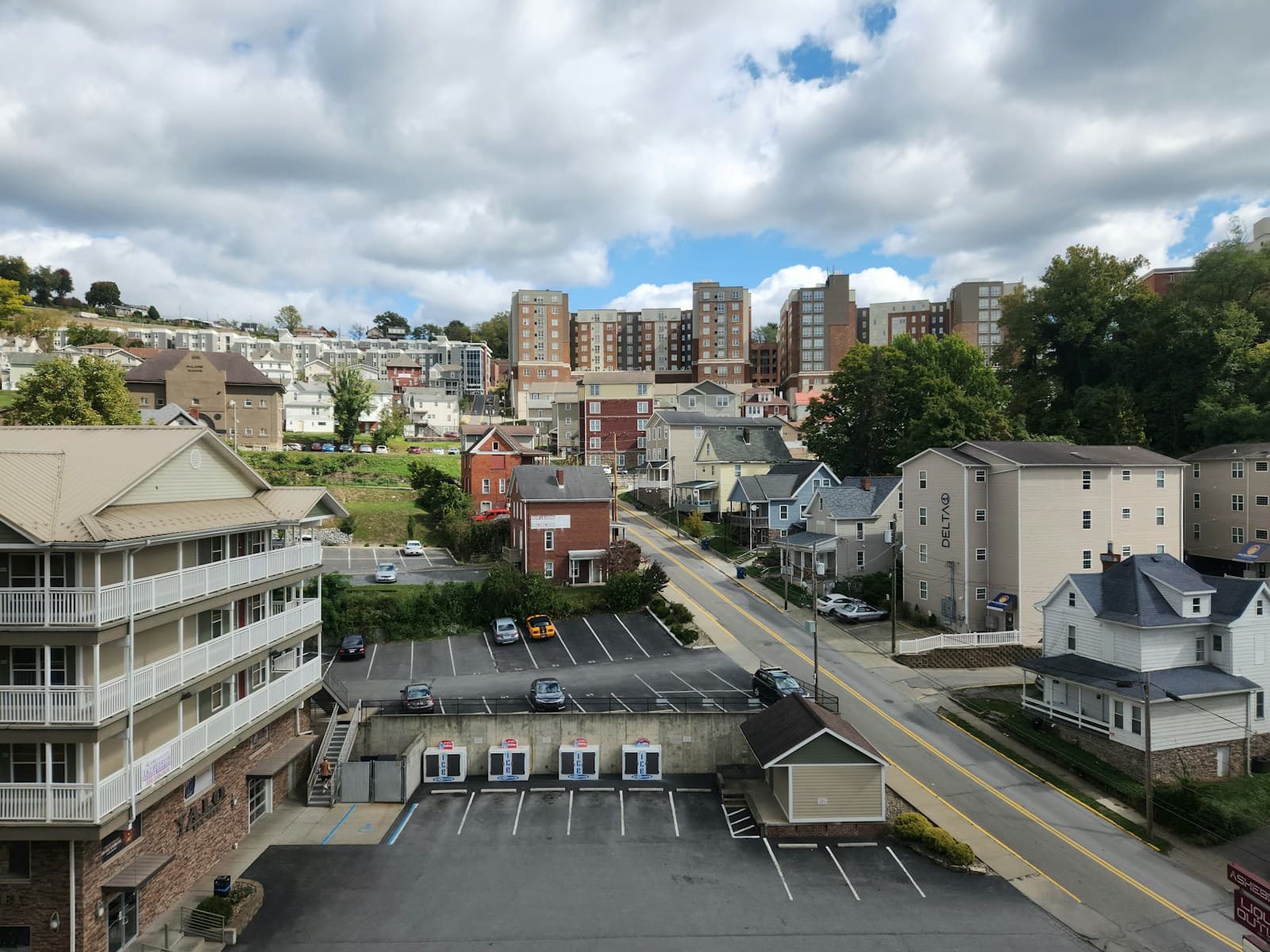
- University Avenue, Monongahela Boulevard, and the Beechurst Avenue corridor see elevated accident frequency during academic year peak hours, particularly where student pedestrian traffic intersects with inexperienced teen drivers navigating unfamiliar hill grades and tight turns. Parents whose teens attend Morgantown High School or University High School and drive these routes daily should expect carriers to apply higher risk scores to their policy, especially if the teen's primary commute overlaps with WVU class change times.
- Morgantown's steep hills—particularly on routes like Patteson Drive, Falling Run Road, and College Avenue—create braking challenges for teen drivers unfamiliar with downhill speed control, and winter snow compounds the risk with extended periods of untreated side streets in residential areas. Collision coverage becomes more relevant here than in flatter West Virginia cities because minor slide-offs and rear-end collisions on grades are common among new drivers during November through March.
- Teen drivers parking overnight in Sunnyside, South Park, or along Grant Avenue face elevated theft and vandalism risk due to dense on-street parking with limited lighting, making comprehensive coverage worth considering even for older vehicles if the teen lives or frequents these neighborhoods. Parents should verify whether their teen's vehicle is parked in a secured lot or on-street when deciding whether to carry comprehensive, as the rate differential between the two parking scenarios can be substantial.
- Teens commuting from outlying areas like Westover, Star City, or Cheat Lake via I-68 or I-79 drive higher-speed interstate segments daily, increasing the severity risk profile compared to teens whose routes stay within Morgantown's 25-35 mph surface streets. Parents should consider whether their teen's commute pattern justifies higher liability limits—$100,000/$300,000 instead of state minimums—because interstate accidents at 65+ mph produce larger injury claims than low-speed campus-area collisions.
- West Virginia does not mandate the good student discount, but most carriers writing in Morgantown offer 10-20% reductions for teens maintaining a 3.0+ GPA at Morgantown High School, University High School, or as WVU freshmen still on a parent's policy. Parents should request proof-of-discount language in writing and verify the carrier accepts report cards or unofficial transcripts, as some require official school verification which can delay the discount application by a billing cycle.
See what adding a teen driver actually costs in your state
Compare quotes from carriers that offer good student discounts — most parents find savings they didn't know were available.
Get Your Free QuoteCoverage Recommendations
Cost estimates are based on available industry data and vary by driver profile. These are not insurance quotes.
Liability Insurance
Teens driving I-68 or I-79 daily from Westover or Cheat Lake face higher-severity interstate crash risk, making 100/300/50 limits worth considering over state minimums.
$140-$240/month for minimum limits; $180-$300/month for 100/300/50Estimated range only. Not a quote.
Collision Coverage
Morgantown's hill grades on Patteson Drive and College Avenue increase slide-off and braking-error risk for new drivers, especially in winter—collision coverage protects parents' investment if the teen is driving a financed or newer vehicle.
$80-$160/month depending on vehicle value and deductibleEstimated range only. Not a quote.
Comprehensive Coverage
Teens parking overnight in Sunnyside, South Park, or along Grant Avenue face elevated theft and break-in risk due to dense on-street parking—comprehensive is often worth the cost even on older vehicles in these neighborhoods.
$40-$90/month depending on vehicle and parking locationEstimated range only. Not a quote.
Uninsured Motorist Coverage
West Virginia does not require uninsured motorist coverage, but Morgantown's mix of student drivers and transient populations means a meaningful share of at-fault drivers carry only state minimums or no valid policy.
$20-$50/month for 100/300 UM limitsEstimated range only. Not a quote.
Full Coverage Package
Parents financing a vehicle for their teen to drive in Morgantown should expect full coverage to cost $300-$450/month due to the city's urban risk profile and campus corridor accident rates.
$300-$450/month for full coverage on a financed vehicleEstimated range only. Not a quote.