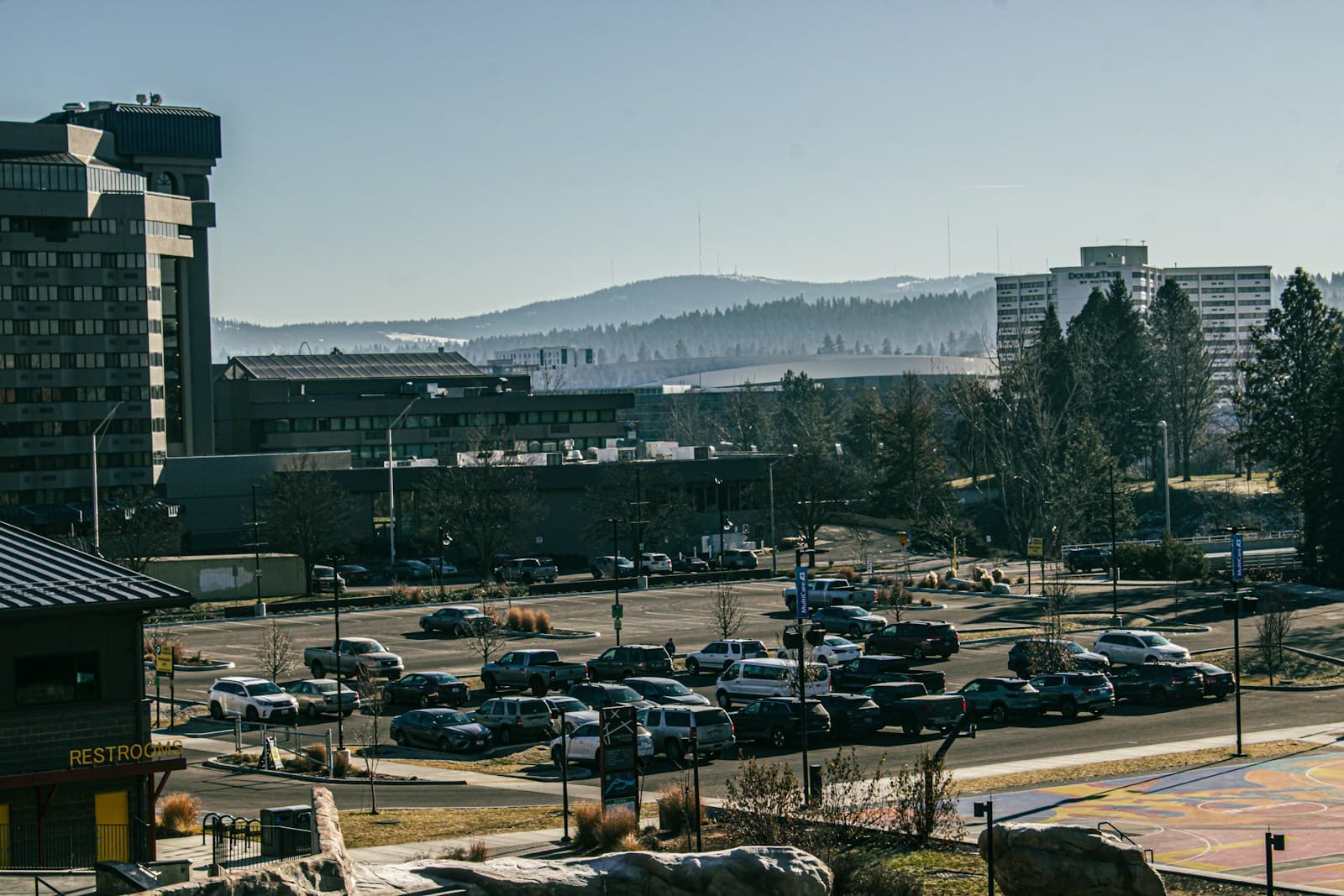
What Affects Rates in Spokane
- Teens driving east to Spokane Valley for school or retail jobs on Sprague Avenue face highway-speed merging at Sullivan Road and Argonne interchanges, where winter ice causes frequent teen accidents. Parents should verify collision coverage deductibles reflect the higher repair costs from freeway-speed impacts, especially if the teen drives during November–February commute hours when black ice forms on elevated sections near the Spokane River bridges.
- The Division Street commercial corridor from downtown through Northtown sees high teen driver incident rates due to parking lot backing collisions at NorthTown Mall and side-impact crashes at the Ruby Street and Francis Avenue intersections. Teens working retail shifts along this route drive during peak congestion, making comprehensive coverage for door-ding and sideswipe damage more relevant than in Spokane's lower-density neighborhoods.
- Teens attending Ferris or driving residential routes on the South Hill face steep grade navigation on 29th Avenue and Grand Boulevard during winter, where sliding into parked cars or downhill rear-endings spike collision claims. Parents whose teens park on these hills overnight should prioritize comprehensive coverage for slide-offs, as Spokane's January freezing rain creates conditions distinct from flatter North Spokane neighborhoods.
- Teens parking at Gonzaga University or Spokane Community College's main campus report higher rates of parking lot incidents and vehicle prowling than residential-only drivers, particularly in the Logan neighborhood lots near Gonzaga. Parents should confirm comprehensive coverage includes theft of belongings from vehicles, as urban campus environments create different risk than teens who park exclusively at home in Spokane Valley.
- Teens commuting west on I-90 to Eastern Washington University in Cheney transition from urban Spokane density to rural highway stretches where deer strikes and rollover risk increase, especially during dawn and dusk drives. This mixed driving profile makes comprehensive coverage for animal collisions more important than for teens who stay within Spokane city limits, while the higher speeds on the Cheney-Spokane corridor increase collision claim severity.
See what adding a teen driver actually costs in your state
Compare quotes from carriers that offer good student discounts — most parents find savings they didn't know were available.
Get Your Free QuoteCoverage Recommendations
Cost estimates are based on available industry data and vary by driver profile. These are not insurance quotes.
Liability Insurance
Division Street and I-90 merging incidents create higher liability claim frequency for Spokane teens than rural Washington drivers, making 100/300/100 limits worth considering over state minimums if your teen commutes during peak hours.
$$Estimated range only. Not a quote.
Collision Coverage
South Hill winter sliding incidents and I-90 freeway-speed crashes result in repair costs that exceed typical deductibles, making collision coverage essential for Spokane teens driving between November and March even if the vehicle is paid off.
$$$Estimated range only. Not a quote.
Comprehensive Coverage
Gonzaga campus parking prowling, deer strikes on the Cheney commute corridor, and South Hill hail damage create comprehensive claim scenarios distinct to Spokane's urban-rural mix, especially for teens parking overnight in Logan or Browne's Addition neighborhoods.
$$Estimated range only. Not a quote.
Uninsured Motorist Coverage
Spokane County's uninsured driver rate runs higher than Seattle metro, making UM/UIM coverage particularly relevant for teens driving Division Street and Sprague Avenue corridors where hit-and-run parking lot incidents occur frequently.
$$Estimated range only. Not a quote.