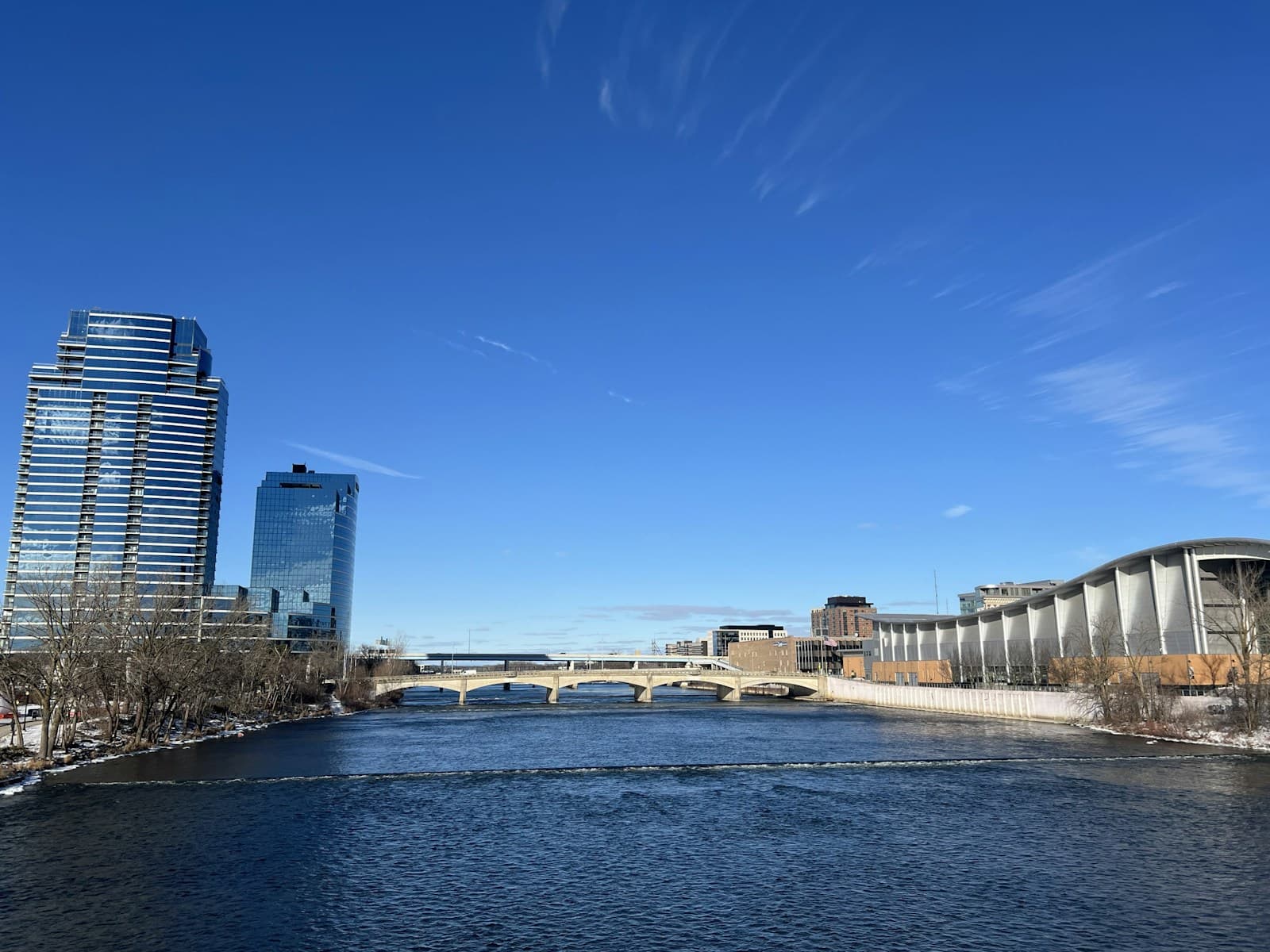
What Affects Rates in Grand Rapids
- The 28th Street commercial strip between I-96 and Kalamazoo Avenue concentrates strip malls, restaurants, and entertainment venues where teens drive frequently. Heavy traffic, frequent lane changes, and parking lot congestion create accident exposure that insurers price into Grand Rapids teen policies. Parents whose teens work or socialize along this corridor should prioritize collision coverage even on older vehicles.
- Many Grand Rapids families live in south-side neighborhoods like Kentwood or Wyoming while teens attend northern schools, requiring daily US-131 commutes through downtown. Highway merging and higher speeds increase severity of teen driver accidents compared to residential street fender-benders. Parents should verify adequate liability limits—Michigan's catastrophic injury system amplifies costs when teens cause multi-vehicle freeway crashes.
- Grand Rapids averages 75 inches of snow annually, with sudden squalls off Lake Michigan creating whiteout conditions on M-6, I-196, and surface streets. Teen drivers with less than two winter driving seasons face elevated comprehensive claims for weather-related single-vehicle accidents. Parents adding winter-licensed teens should confirm comprehensive deductibles are affordable, as November-February claims are common.
- Teens attending Grand Valley State's downtown campus or working in the Medical Mile navigate tight parking structures and street parking near Rosa Parks Circle. Door dings, backing collisions, and mirror strikes occur frequently in urban parking environments. Collision coverage becomes cost-effective even for older vehicles if your teen parks downtown daily.
- Grand Rapids Public Schools, Forest Hills schools, and private academies release students between 2:30–3:30 PM, coinciding with early rush hour on East Beltline, Knapp Street, and Cascade Road. Teen drivers merging into congested traffic increase rear-end collision risk. Parents should discuss whether their teen's school location and after-school job create high-exposure drive times that justify higher liability limits.
See what adding a teen driver actually costs in your state
Compare quotes from carriers that offer good student discounts — most parents find savings they didn't know were available.
Get Your Free QuoteCoverage Recommendations
Cost estimates are based on available industry data and vary by driver profile. These are not insurance quotes.
Liability Insurance
US-131 and I-196 freeway commutes in Grand Rapids increase multi-vehicle crash risk where liability costs escalate quickly, making 100/300/100 limits worth considering over state minimums.
Increases premium significantly but protects parent assetsEstimated range only. Not a quote.
Collision Coverage
High-traffic intersections on 28th Street, East Beltline, and downtown parking structures create frequent teen fender-benders—collision coverage prevents parents from paying repair bills out-of-pocket.
Typically 40–50% of total premium for teen driversEstimated range only. Not a quote.
Comprehensive Coverage
Lake-effect snow and ice storms in Grand Rapids cause frequent single-vehicle winter accidents and parking lot slides; comprehensive with a $500 deductible costs less than one weather-related repair.
Lower cost than collision, essential November–MarchEstimated range only. Not a quote.
Uninsured Motorist Coverage
Urban Grand Rapids neighborhoods see higher uninsured driver rates than suburban Kent County areas, making UM coverage a cost-effective safety net if your teen drives frequently downtown or on Division Avenue.
Moderate cost increase, recommended for urban drivingEstimated range only. Not a quote.