What Affects Rates in Des Moines
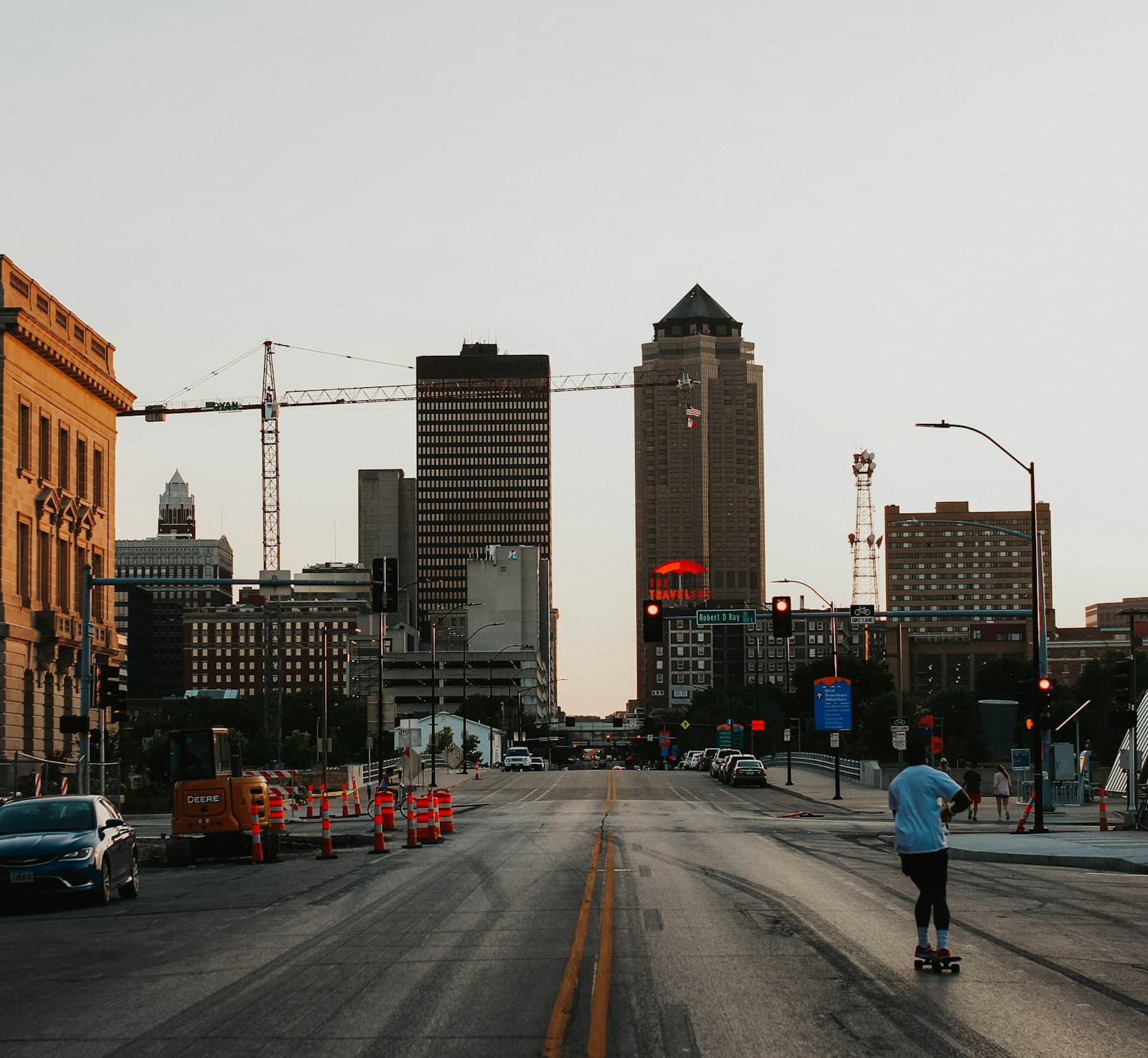
- Teen drivers commuting to Johnston, Urbandale, or West Des Moines schools frequently use I-235, where merge lanes at 63rd Street and University Avenue see elevated fender-bender rates during morning rush. Parents should confirm whether collision coverage deductibles of $500 vs $1,000 make financial sense if the teen drives this route daily, as urban highway exposure increases claim likelihood compared to surface street commutes in smaller Iowa cities.
- High schools like East, Roosevelt, and Hoover have parking lots where teen drivers navigate tight spaces during arrival and dismissal, contributing to minor collision and comprehensive claims from door dings and backing accidents. Comprehensive coverage becomes more relevant in Des Moines than in towns where students park in open lots, especially if your teen drives a vehicle worth more than $5,000.
- Des Moines teens learning to drive face snow and ice on arterials like Fleur Drive, MLK Jr Parkway, and University Avenue from November through March, with black ice forming under bridges and overpasses. Collision coverage claims for young drivers spike 20–30% in winter months locally, making this coverage essential if your teen drives year-round rather than only in fair weather.
- Many Des Moines teens work part-time jobs in West Des Moines (Jordan Creek mall area), Ankeny retail districts, or along Merle Hay Road, requiring evening drives on I-35 and I-80 interchanges where visibility and speed differentials create risk. If your teen commutes to work, insurers factor in annual mileage estimates—keeping reported mileage accurate for a student who only drives locally vs one commuting to suburban job sites can affect rates by 10–15%.
- Des Moines's urban rate base means adding a teen to a parent's existing multi-car policy usually costs $250–$400/mo, while a separate policy for the same teen would run $350–$550/mo due to loss of multi-car and tenure discounts. The margin favoring add-to-policy is narrower here than in rural Iowa, but still typically saves $1,200–$1,800 annually unless the parent's record includes recent claims that already elevate the base rate.
See what adding a teen driver actually costs in your state
Compare quotes from carriers that offer good student discounts — most parents find savings they didn't know were available.
Get Your Free QuoteCoverage Recommendations
Cost estimates are based on available industry data and vary by driver profile. These are not insurance quotes.
Liability Insurance
Des Moines rush hour on I-235 and I-80 merges increases multi-vehicle accident risk, making higher liability limits critical if your teen commutes to school or work during peak hours.
Minimum coverage $40–$70/mo; recommended limits $90–$140/mo for teen driversEstimated range only. Not a quote.
Collision Coverage
Urban parking at East or Roosevelt high schools and winter black ice on Fleur Drive and MLK Jr Parkway make collision coverage essential if your teen drives a car worth more than $3,000–$4,000.
$80–$180/mo for teen drivers depending on vehicle value and deductibleEstimated range only. Not a quote.
Comprehensive Coverage
Vehicle theft rates in Des Moines neighborhoods near downtown and along Euclid Avenue are higher than Iowa's rural counties, and spring hailstorms damage cars in open school parking lots annually.
$30–$70/mo for teen drivers depending on vehicle age and locationEstimated range only. Not a quote.
Uninsured Motorist Coverage
Des Moines has higher uninsured driver rates than surrounding Polk County suburbs, particularly in high-traffic corridors like University Avenue and East 14th Street where your teen may encounter uninsured motorists.
$15–$35/mo additional for teen driver policiesEstimated range only. Not a quote.
Full Coverage Package
Parents in Des Moines financing a safer used car for their teen must carry full coverage, and the urban claim frequency makes this protection worthwhile even for older paid-off vehicles if replacement cost exceeds $6,000–$7,000.
$200–$350/mo total for teen drivers on full coverage in Des MoinesEstimated range only. Not a quote.