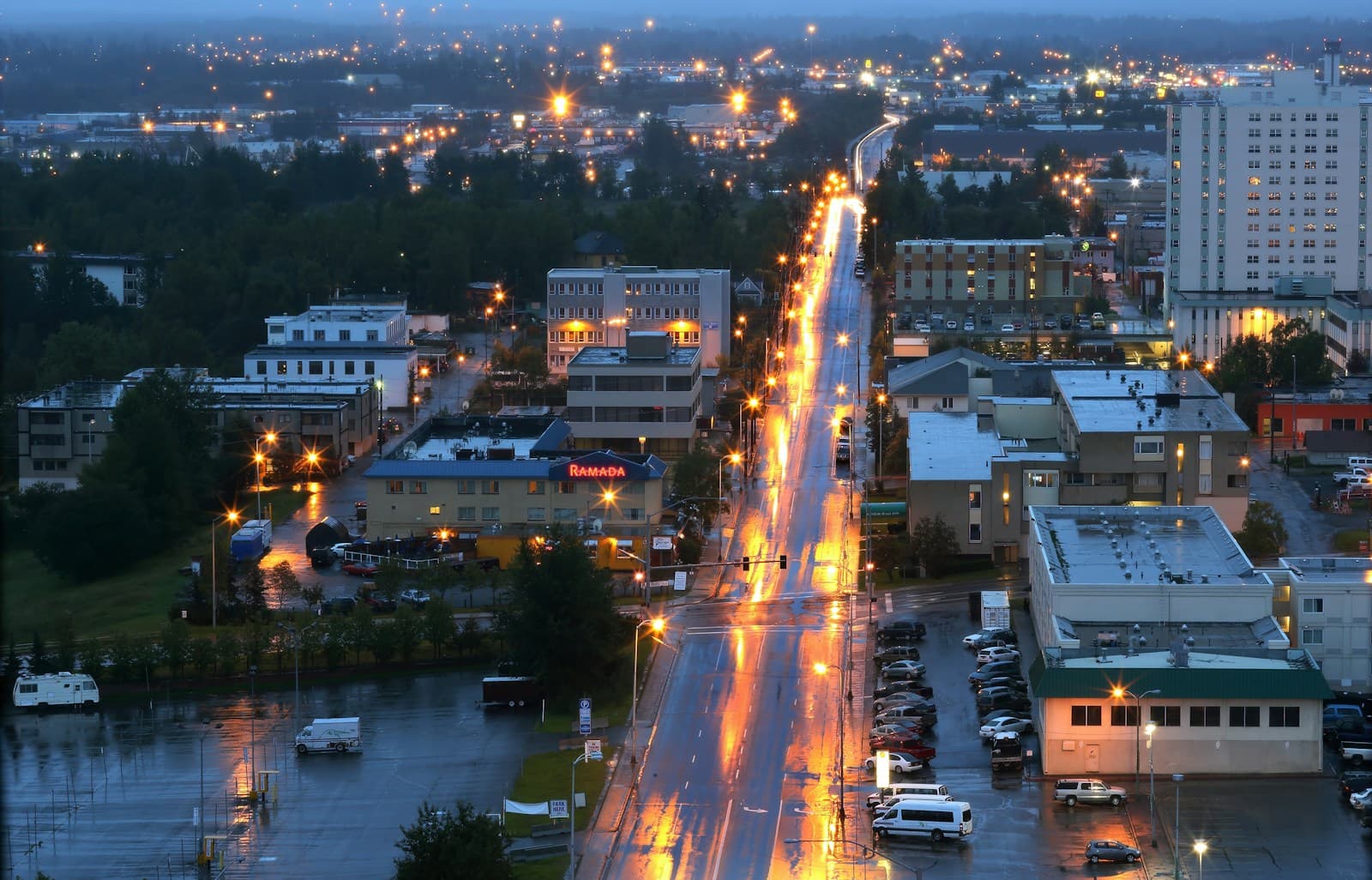
What Affects Rates in Anchorage
- Teens commuting from Eagle River or Chugiak to Anchorage schools drive the Glenn Highway daily, where speed limits reach 65 mph and winter ice creates frequent multi-vehicle pileups. Parents whose teens use this corridor should prioritize collision coverage even on older vehicles, as highway-speed impacts generate repair costs that exceed the value of many first cars. The stretch between Hiland Road and Muldoon sees particularly high crash rates during morning and afternoon school commutes when black ice forms.
- Anchorage's ice season spans seven months, and teen drivers here encounter black ice on Northern Lights Boulevard, Minnesota Drive, and the Seward Highway during their entire first year of driving. Insurers price this extended winter risk into Anchorage premiums, making them 15–20% higher than Fairbanks where temperatures stay cold enough to prevent freeze-thaw cycles. Parents should confirm their teen completes winter driving instruction specific to ice management, as some carriers offer modest discounts for Alaska-specific defensive driving courses.
- Service High School, West High School, and Dimond High School parking lots generate frequent low-speed collision claims as teen drivers back into other vehicles or misjudge spacing in snow-narrowed lanes. Comprehensive coverage becomes relevant here for vandalism and theft, particularly at South Anchorage high schools where vehicle break-ins targeting electronics are common. Parents can sometimes reduce rates by excluding collision coverage on older vehicles but keeping comprehensive, as the latter costs $30–$60/month while the former adds $150–$250/month for a teen driver.
- Teens working retail shifts at Dimond Center or food service jobs along Old Seward Highway drive during evening hours when moose crossings and reduced visibility increase crash risk. Parents whose teens commute to work should verify their policy covers all household drivers for any vehicle, as some families mistakenly assume excluding the teen from a newer car will save money when the teen may still legally drive it in an emergency. Anchorage's urban moose population creates collision risk distinct from rural Alaska, where wildlife encounters happen at highway speeds rather than in 35 mph commercial zones.
- Anchorage's higher base rates mean adding a teen driver to a parent policy here increases the total premium by 80–120%, compared to 60–90% in rural Alaska where baseline costs start lower. A parent paying $180/month in Anchorage might see their bill jump to $400–$450/month with a teen driver, whereas a Kenai parent paying $140/month might reach only $280–$320/month. This amplification makes the good student discount (typically 10–15%) and telematics programs more valuable in Anchorage, as the percentage applies to a larger base premium.
See what adding a teen driver actually costs in your state
Compare quotes from carriers that offer good student discounts — most parents find savings they didn't know were available.
Get Your Free QuoteCoverage Recommendations
Cost estimates are based on available industry data and vary by driver profile. These are not insurance quotes.
Liability Insurance
Anchorage's urban traffic density on Minnesota Drive and the Seward Highway increases the chance your teen will be found at fault in a multi-vehicle crash, making 100/300/100 limits worth considering over Alaska's 50/100/25 minimums.
$120–$180/month for teen driverEstimated range only. Not a quote.
Collision Coverage
Parents whose teens drive the Glenn Highway or navigate icy intersections at Northern Lights and Minnesota should weigh collision premiums ($150–$250/month added cost) against vehicle value, as winter pileups here frequently total older cars.
$150–$250/month added for teenEstimated range only. Not a quote.
Comprehensive Coverage
Anchorage's urban moose population creates collision risk in midtown parking lots and along Old Seward Highway, and comprehensive also covers break-ins common at South Anchorage high school parking lots for far less than collision ($30–$60/month).
$30–$60/month added for teenEstimated range only. Not a quote.
Uninsured Motorist Coverage
Alaska does not require uninsured motorist coverage, but Anchorage's higher traffic volume increases the chance your teen will encounter an at-fault driver carrying only the state's low 50/100/25 minimums, making UM/UIM coverage a cost-effective safeguard.
$15–$35/month added for teenEstimated range only. Not a quote.