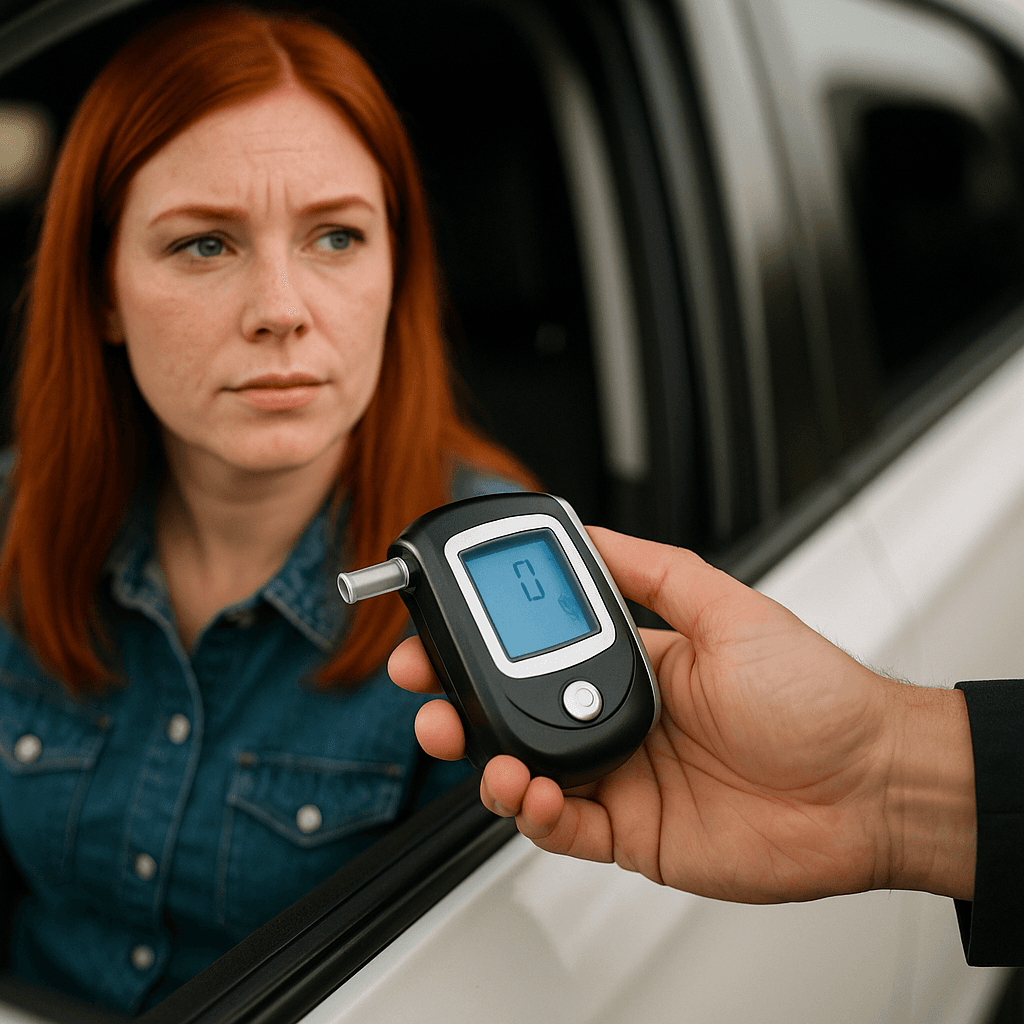
Your teen got a DUI and your carrier is offering exclusion as an alternative to a 200–300% premium spike. Before you sign, understand what you're actually agreeing to — and why the short-term savings can backfire.
What Named Driver Exclusion Actually Means After a Teen DUI
When your teen gets a DUI, your carrier will typically quote a renewal premium that's 200–300% higher than your current rate — an increase that can push annual premiums from $2,400 to $7,200 or more depending on your state and coverage level. Most carriers will offer an alternative: sign a named driver exclusion form that removes your teen from the policy entirely, and your rate stays roughly the same or increases only modestly. The trade-off sounds straightforward, but it's not.
A named driver exclusion is a legal agreement stating that a specific person — in this case, your teen — will never drive any vehicle listed on your policy. Not in an emergency, not to move a car in the driveway, not once. If your excluded teen drives your car and causes an accident, your liability coverage will not respond. The injured party can sue your teen directly for damages, and if your teen has no assets or independent insurance, they can pursue a judgment against you as the vehicle owner under vicarious liability laws that exist in most states.
The exclusion doesn't expire when your teen turns 18 or moves out. It remains in effect until you formally request removal in writing and your carrier re-underwrites the policy at the higher rate. Many parents sign the exclusion form thinking it's a temporary workaround while the teen's violation is fresh, then forget it exists — only discovering the gap years later when the now-20-year-old borrows the car and gets into an accident.
Why Carriers Offer Exclusion and What It Costs You Long-Term
Carriers offer named driver exclusion because a teen DUI creates massive actuarial risk. According to the National Highway Traffic Safety Administration, drivers aged 16–20 have the highest rate of alcohol-impaired fatal crashes of any age group, and a DUI conviction signals substantially elevated risk for the next three to five years. Insurers would prefer to non-renew the entire policy, but many states restrict mid-term cancellation after a household member's DUI — so exclusion becomes the compromise that keeps you as a customer while eliminating their exposure.
The immediate cost savings are real. If your current annual premium is $2,800 and adding your post-DUI teen would push it to $8,400, signing an exclusion keeps your rate near baseline. But you're not saving $5,600 — you're deferring it and potentially doubling it. Your teen still needs to drive, which means they need their own standalone high-risk policy. A standalone policy for a 17-year-old with a DUI typically costs $6,000–$10,000 annually depending on the state, compared to $3,500–$5,600 for the incremental cost of adding them to your family policy.
You're also losing multi-car, multi-policy, and bundling discounts that would partially offset the teen's high rate if they remained on your policy. Most importantly, you're creating a situation where your teen is uninsured if they're ever in a household vehicle — and enforcement is impossible. If your teen lives at home and has access to your car keys, the exclusion is a liability time bomb.
See what adding a teen driver actually costs in your state
Compare quotes from carriers that offer good student discounts — most parents find savings they didn't know were available.
Get Your Free Quote✓ Good Student Discounts✓ No Obligation✓ Licensed Carriers✓ All 50 States
State-Specific Rules on Exclusion and DUI Rating
Not all states allow named driver exclusion, and the rules vary widely. California, Michigan, New York, and several other states prohibit or severely restrict exclusions for household members with regular access to vehicles. In these states, if your teen lives with you and has a license — even a restricted one — the carrier must either cover them at the surcharged rate or non-renew the entire policy. You don't get the exclusion option.
In states that do allow exclusion, the surcharge period and rate impact differ significantly. In Texas, a DUI on a teen's record typically results in a 200–250% surcharge that lasts three years from the conviction date. In Florida, the surcharge can exceed 300% and the violation remains ratable for up to five years. Some states mandate that insurers offer SR-22 or FR-44 filings after a DUI conviction, which is a certificate of financial responsibility filed with the state proving the driver carries minimum liability coverage. If your state requires an SR-22 and you exclude your teen from your policy, they must obtain it through their own standalone policy — and SR-22 policies for teen drivers typically cost 40–60% more than standard high-risk policies.
Graduated licensing laws also complicate exclusion decisions. If your teen's DUI occurred while holding a learner's permit or provisional license, most states will suspend the license entirely for 6–12 months and reset the graduated licensing timeline. In states like Virginia and North Carolina, a DUI during the learner phase can delay full licensure by up to two years. Excluding a currently unlicensed teen might seem logical, but if they regain limited driving privileges before you remember to address the exclusion, you're exposed.
The Household Vehicle Exposure Problem
The biggest risk with exclusion is the assumption that you can control access. Your teen agrees not to drive your vehicles, you sign the form, and you assume the problem is solved. But consider realistic scenarios: your teen's car breaks down and they borrow yours to get to a required AA meeting as part of probation. You're incapacitated and your teen drives you to the emergency room. Your spouse forgets about the exclusion and hands your teen the keys to pick up groceries. In any of these cases, if your teen causes an accident, your liability coverage will deny the claim.
The injured party doesn't care about your exclusion form. They will sue your teen and you as the vehicle owner. If the damages exceed your teen's standalone policy limits — or if your teen has no policy because you excluded them and assumed they wouldn't drive — the plaintiff can pursue a judgment against your household assets. Homeowners insurance does not cover auto liability. Your retirement accounts, home equity, and wages can all be at risk.
Some parents attempt to solve this by titling the teen's vehicle separately and ensuring the teen has their own standalone policy on that specific vehicle only. This works in theory, but it requires absolute discipline. If your teen's vehicle is in the shop and they drive your car even once, the exclusion creates exposure. Many families discover this gap only after an accident, at which point it's too late.
When Exclusion Might Make Sense — and the Conditions Required
Exclusion can be a rational choice in a narrow set of circumstances. If your teen is away at college more than 100 miles from home with no vehicle and genuinely no access to household cars, exclusion may reduce your premium without creating real exposure. If your teen is incarcerated or in a long-term residential treatment program with no driving privileges, exclusion during that period makes sense. If your teen is over 18, financially independent, and living in a separate household with their own vehicle and policy, formal exclusion from your policy is appropriate.
The key condition is permanent, verifiable separation from household vehicles. If your teen lives at home, has a license, and has physical access to your car keys, exclusion is a legal fiction. Even if your teen promises not to drive, even if you hide the keys, the exclusion exposes you to uninsured liability every single day.
If you do exclude your teen, document the decision carefully. Obtain a standalone high-risk policy for your teen on a vehicle titled in their name only. Verify that the policy includes liability limits at least as high as your own — ideally 100/300/100 or higher, because post-DUI drivers are at elevated accident risk. Set a calendar reminder for the date when the DUI surcharge would naturally expire (typically three to five years from conviction) so you can re-evaluate whether to lift the exclusion and bring your teen back onto your policy. Never assume the exclusion is temporary unless you have a written plan to reverse it.
The Alternative: Absorbing the Rate Increase and Managing the Cost
For most families, the better path is to keep the teen on the family policy, absorb the surcharge, and aggressively pursue every available discount and cost reduction strategy. Yes, the rate increase is severe — but it's transparent, it's coverage, and it eliminates the uninsured exposure risk that exclusion creates.
Start by shopping the policy. Not all carriers rate teen DUIs identically. Some non-standard carriers specialize in high-risk teen drivers and may offer a lower combined premium than your current carrier's surcharged rate. If your teen completes an alcohol awareness program or defensive driving course, some states mandate a small premium credit. If your teen's license was suspended and they're now on a restricted license with an ignition interlock device, some carriers will apply a modest discount recognizing the reduced risk.
Consider adjusting coverage on the vehicle your teen drives. If your teen is driving a 12-year-old sedan worth $4,000, dropping collision and comprehensive coverage eliminates $600–$1,200 in annual premium while maintaining the liability protection that actually matters. Increase your deductible on all vehicles to $1,000 or higher to reduce premium across the board. If your teen is still in school and maintaining a 3.0 GPA or higher, the good student discount still applies even after a DUI — most carriers will honor it as long as your teen remains academically eligible.
Finally, set a clear expectation with your teen about the financial and legal stakes. The DUI has already triggered court costs, fines, license reinstatement fees, and potentially SR-22 filing fees that can total $3,000–$7,000. The insurance surcharge is an additional consequence that will last three to five years. Frame it clearly: this is the cost of the decision, and the family is absorbing it to maintain coverage and protect everyone from uninsured liability exposure. But your teen needs to understand that any future violation — even a speeding ticket — will compound the surcharge and may result in policy non-renewal.
